
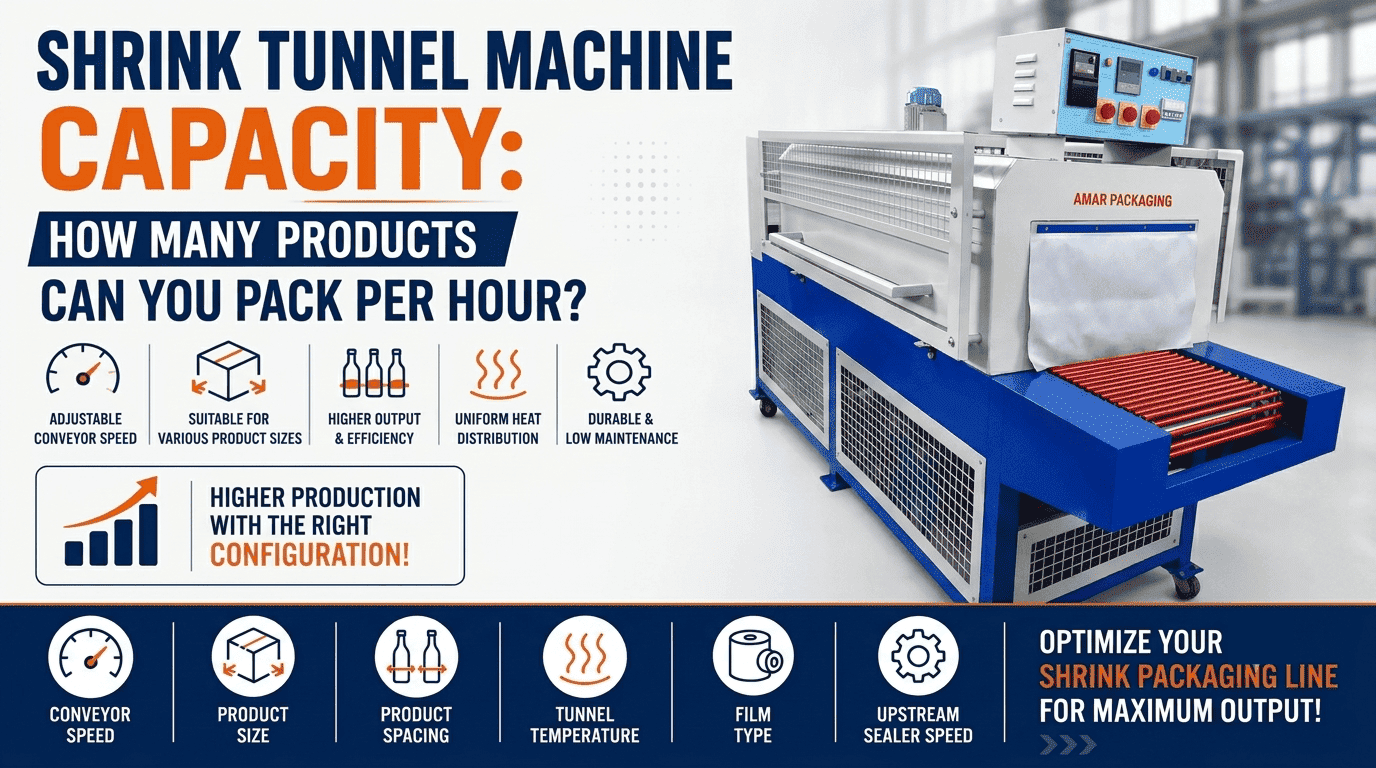
Shrink Tunnel Machine Capacity: How Many Products Can You Pack Per Hour? Shrink Tunnel Machine Introduction For manufacturers, FMCG companies, food processors, pharmaceutical businesses, and other industries, a shrink tunnel machine plays an important role in automated shrink packaging. It uses controlled heat to shrink plastic film tightly around a product or product bundle, creating a secure, professional and consistent package. One of the most important questions when selecting a shrink tunnel machine is production capacity: How many products or packs can a shrink tunnel machine process per hour? There is no single answer because actual production depends on several factors, including product dimensions, product spacing, conveyor speed, tunnel chamber size, shrink film, heating conditions, upstream sealing equipment and the overall packaging-line configuration. This guide explains how a shrink tunnel machine works, how its capacity is calculated, what affects production per hour, and how to select the right machine for your packaging requirements. What Is a Shrink Tunnel Machine? A shrink tunnel machine is a heat-shrinking packaging machine that uses controlled hot air to shrink plastic film around a product or product bundle. The product is first wrapped or sealed with suitable shrink film. It then travels through the heated tunnel on a conveyor. As the film passes through the controlled heating zone, it contracts around the product and forms a tight package. A shrink tunnel machine can be used as part of a packaging system with equipment such as: L-sealer Web sealer Sleeve wrapping machine Automatic shrink wrapping machine Product feeding conveyors Cooling conveyors Other automated packaging equipment Common Applications of Shrink Tunnel Machines Shrink tunnel machines are used across a wide range of industries, including: Food and beverage packaging Water bottle multipacks FMCG products Pharmaceutical cartons Cosmetic products Stationery Electronic products Household products Industrial components Cartons and boxes Multipack products The correct machine configuration depends on the product size, packaging format, required output and type of shrink film being used. How Does a Shrink Tunnel Machine Work? The working process of a shrink tunnel machine can be divided into several stages: Product Wrapping The product or product bundle is covered with suitable shrink film. Film Sealing An L-sealer, web sealer, sleeve wrapper or other sealing system closes the film around the product. Product Infeed The wrapped product enters the shrink tunnel through the conveyor system. Controlled Heating Hot air circulates inside the tunnel and transfers heat to the shrink film. Film Shrinking The film contracts and conforms closely to the shape of the product or bundle. Finished Pack Discharge The shrink-wrapped product exits the tunnel and can move to cooling, inspection, secondary packaging or palletizing.This means the shrink tunnel machine is normally one part of the complete packaging line. Its production capacity should therefore be considered together with the equipment feeding it. How Many Products Can a Shrink Tunnel Machine Pack Per Hour? The production capacity of a shrink tunnel machine depends on the complete packaging application. Important variables include: Product dimensions Product arrangement Product spacing Conveyor speed Tunnel length Tunnel width and height Film type Film thickness Required shrink quality Heating conditions Upstream sealer speed Operator handling Changeover time A simple theoretical calculation is: Packs Per Hour = Packs Per Minute × 60 For example, if a packaging line processes 20 packs per minute: 20 × 60 = 1,200 packs per hour However, theoretical capacity should not automatically be treated as practical production capacity. Loading, product spacing, film changes, machine adjustments, changeovers and upstream equipment can reduce actual output. For this reason, the best way to determine the capacity of a shrink tunnel machine is to evaluate the actual product and complete packaging configuration. Shrink Tunnel Machine Production Capacity Different packaging applications require different production levels. Rather than assigning one universal capacity to every shrink tunnel machine, manufacturers should evaluate production according to their product and packaging configuration. Production Requirement Typical Consideration Small-scale production Manual or semi-automatic feeding and flexible operation Medium-scale production Conveyorised semi-automatic or automatic configuration High-volume production Automatic feeding, continuous sealing and higher conveyor throughput Industrial production Integrated packaging line designed around the required output The actual number of packs per hour should be confirmed based on product dimensions, pack configuration, film characteristics, tunnel settings and upstream machine capacity.This approach is more reliable than selecting a machine only from a maximum conveyor-speed specification. Products Per Hour vs Packs Per Hour A more practical capacity estimate can be made by considering conveyor speed and product pitch. Product Pitch = Product Length + Gap Between Products For example, if: Conveyor speed = 50 ft/min Product length = 10 inches Product gap = 2 inches Then: Product pitch = 10 + 2 = 12 inches Convert the conveyor speed to inches per minute: 50 × 12 = 600 inches/minute Then: 600 ÷ 12 = 50 packs/minute The theoretical hourly output becomes: 50 × 60 = 3,000 packs/hour If an operational efficiency factor of 85% is applied: 3,000 × 0.85 = 2,550 practical packs/hour This example demonstrates why actual production depends on more than conveyor speed. The same shrink tunnel machine can produce different outputs depending on product size, spacing, operating conditions and line efficiency. Products Per Hour vs Packs Per Hour When discussing shrink tunnel machine capacity, it is important to distinguish between products and packs. A pack may contain multiple individual products. For example, if six water bottles are shrink-wrapped together: 1 pack = 6 bottles If the packaging line produces: 1,000 packs/hour then the individual product output is: 1,000 × 6 = 6,000 bottles/hour Therefore, manufacturers should specify whether their production requirement is measured in: Products per hour Packs per hour Bottles per hour Bundles per hour Cartons per hour Cases per hour This avoids confusion when comparing different packaging machines or requesting a quotation. What Determines Shrink Tunnel Machine Capacity? Several factors influence the actual production capacity of a shrink tunnel machine. Product Dimensions Product size directly affects tunnel requirements and production planning. Large cartons and multipacks may require: Wider conveyors Greater chamber
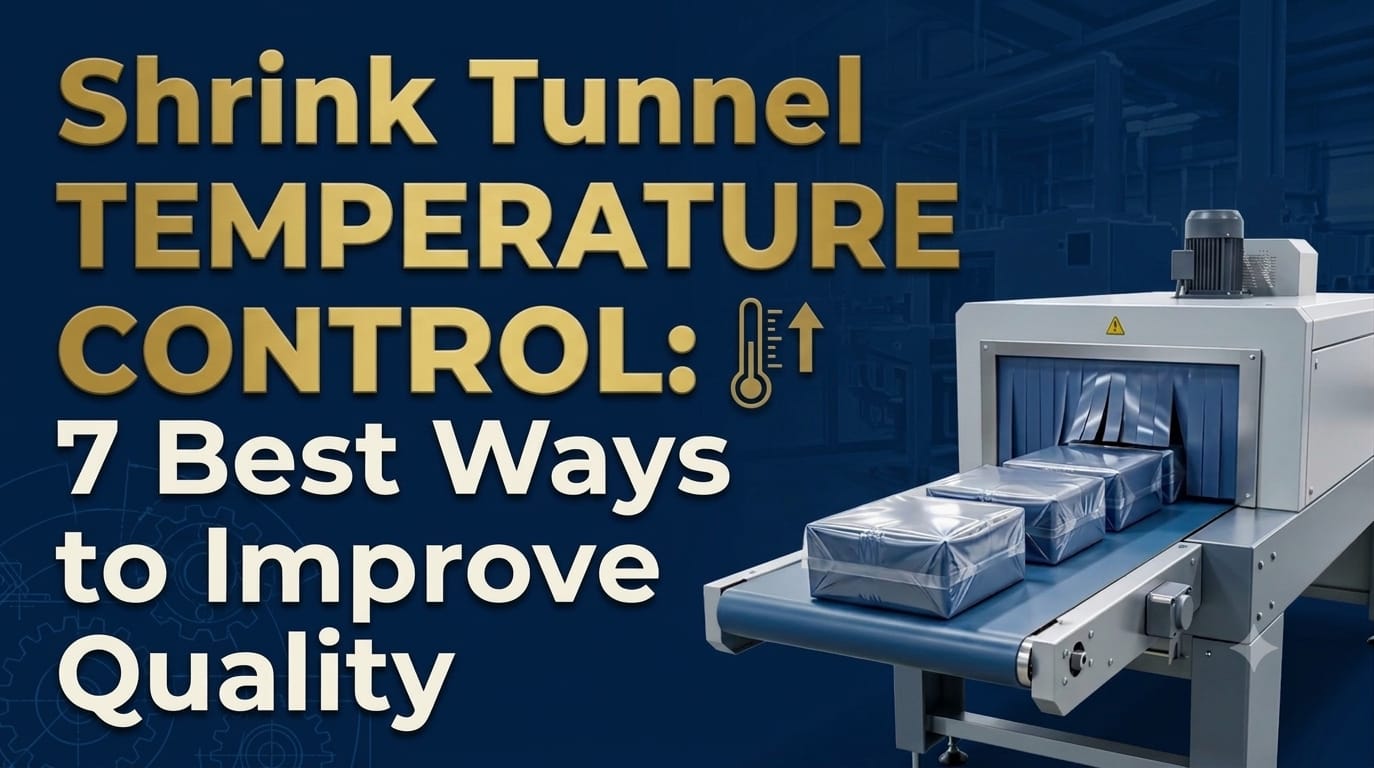
How Temperature Control Impacts Shrink Tunnel Machine Performance
How Temperature Control Impacts Shrink Tunnel Machine Performance Shrink Tunnel Machine Introduction In manufacturing environments, temperature settings often vary depending on product shape, film thickness, and production speed. For example, POF film used for food trays generally requires lower temperature settings compared to PE film used for heavy industrial packaging. An industrial shrink tunnel machine uses controlled heat, airflow, and conveyor speed to achieve uniform shrink wrapping results. When temperature, conveyor speed, and airflow are properly balanced, the film shrinks uniformly to create a secure, professional-looking package. Incorrect settings can lead to wrinkles, loose wrapping, burnt film, excessive energy consumption, and unnecessary production downtime. In this guide, Amarpack Machines Private Limited explains how temperature control influences shrink tunnel performance, common packaging defects, and practical methods to optimize your packaging process. Why Temperature Control Matters in a Shrink Tunnel Machine Temperature is the heart of every shrink wrapping operation. Shrink films are engineered to contract only within a specific heat range. When the correct temperature is maintained, the film tightly conforms to the product while preserving its appearance and strength. Proper temperature control provides several advantages: Uniform and attractive packaging Strong film shrinkage Reduced material wastage Improved production speed Better product protection during storage and transportation Lower energy consumption AmarPack Machine Typical Application Example Temperature Range APST-100 Small packaging 130–170°C APST-200 Medium production 140–180°C APST-300 High production 150–220°C 1.How a Shrink Tunnel Machine Uses Heat A shrink tunnel consists of several integrated components that work together: Electric heating elements generate controlled heat. High-speed blowers circulate hot air throughout the chamber. A conveyor transports products at a controlled speed. Digital temperature controllers regulate the desired heat level. Airflow ducts distribute heat evenly around the product. As products pass through the tunnel, the shrink film softens and contracts evenly around the product, creating a clean and durable package. 2. Recommended Temperature for Different Shrink Films Different shrink films require different operating temperatures. Product Application Film Type Temperature Range Conveyor Setting Food trays POF 140–160°C Medium speed Water bottles PVC/POF 110–150°C High speed Pharmaceutical cartons POF 140–160°C Medium speed Industrial parts PE 170–220°C Slow speed The ideal temperature also depends on film thickness, product size, conveyor speed, and ambient working conditions. 3. Common Problems Caused by Incorrect Temperature Temperature Too Low When the tunnel temperature is below the recommended range: Loose packaging Wrinkled film Open corners Incomplete shrinkage Weak package appearance Temperature Too High Excessive heat can create: Burnt or melted film Product damage Film discolorationHoles in the packaging Excessive energy usage Maintaining the correct balance is essential for producing high-quality packages consistently. 4. Conveyor Speed and Temperature Work Together Conveyor speed determines how long the product remains inside the heating chamber. Fast Conveyor + Low Temperature Loose shrink Wrinkles Poor film adhesion Slow Conveyor + High Temperature Burnt film Product overheating Excessive shrinkage Balanced Settings The best packaging results are achieved by balancing conveyor speed with tunnel temperature according to the product and shrink film being used. 5. Factors That Affect Shrink Tunnel Performance Several variables influence shrink quality: Type of shrink film Film thickness Product dimensions Product material Conveyor speed Air circulation Heating element efficiency Ambient temperature Tunnel length Machine maintenance Operators should evaluate these factors together rather than adjusting temperature alone 6. How Digital Temperature Controllers Improve Performance Modern shrink tunnel machines use digital PID temperature controllers that continuously monitor and regulate heat levels. Benefits include: Accurate temperature control Faster machine warm-up Stable heat throughout production Reduced operator intervention Improved packaging consistency Lower electricity consumption Digital controls also reduce the risk of packaging defects caused by temperature fluctuations. 7. Industries That Benefit from Proper Temperature Control Food & Beverage Ensures hygienic, attractive packaging while preserving product quality. Pharmaceuticals Protects medicines and medical devices with secure, tamper-evident packaging. Cosmetics Produces wrinkle-free packaging that enhances shelf appeal. FMCG Supports high-speed production with consistent packaging quality. Electronics Protects delicate products without exposing them to excessive heat. Industrial Components Provides secure packaging for transportation and storage. 8. Tips to Improve Shrink Tunnel Efficiency Follow these best practices for better performance: Use the correct shrink film for your application. Preheat the tunnel before production. Match conveyor speed with film specifications. Clean heating chambers and blowers regularly. Inspect heating elements periodically. Replace worn conveyor belts when required. Avoid unnecessary overheating. Calibrate temperature controllers at scheduled intervals. Preventive maintenance not only improves packaging quality but also extends machine life. Get a Quote within a Hours 👉 Why Choose Amarpack Shrink Tunnel Machines? AmarPack Machines Pvt Ltd has been a trusted leader in manufacturing industrial packaging machinery since 1998. Engineered for high thermal efficiency and continuous operation, our shrink tunnels: Our machines offer: Digital temperature control Uniform hot air circulation Energy-efficient heating systems Adjustable conveyor speed Heavy-duty construction Low maintenance design Compatibility with POF, PVC, and PE films Custom machine configurations for different industries Key Advantages 27+ Years of Expertise: Proven track record in building durable, high-performance packaging systems. Customized Engineering: Tailored chamber sizes, airflow controls, and conveyor options (mesh, roller, or slat chain). Reliable & Energy Efficient: Built with heavy-duty insulation to minimize heat loss and operational downtime. Turnkey Support & Spare Parts: Fast access to genuine OEM replacement parts, complete installation, and technical assistance. Made in India: Built to international standards with dependable local aftermarket support. Frequently Asked Questions Q1. What is the ideal temperature for a shrink tunnel machine? The ideal temperature depends on the shrink film being used. Most POF films perform between 130°C and 170°C, while PE films generally require higher temperatures. Q2.Why does shrink film wrinkle? Wrinkling is usually caused by insufficient heat, improper airflow, incorrect conveyor speed, or unsuitable film selection. Q3. Can excessive heat damage products? Yes. Excessive temperature can burn shrink film, deform heat-sensitive products, and increase packaging defects. Q4.Does shrink tunnel temperature affect electricity consumption? Yes. Excessively high temperature increases power consumption without improving packaging quality. Q5. What happens if conveyor speed is too high? The film receives insufficient heat exposure, causing loose or incomplete shrinking. Know More