Introduction
In manufacturing environments, temperature settings often vary depending on product shape, film thickness, and production speed. For example, POF film used for food trays generally requires lower temperature settings compared to PE film used for heavy industrial packaging.
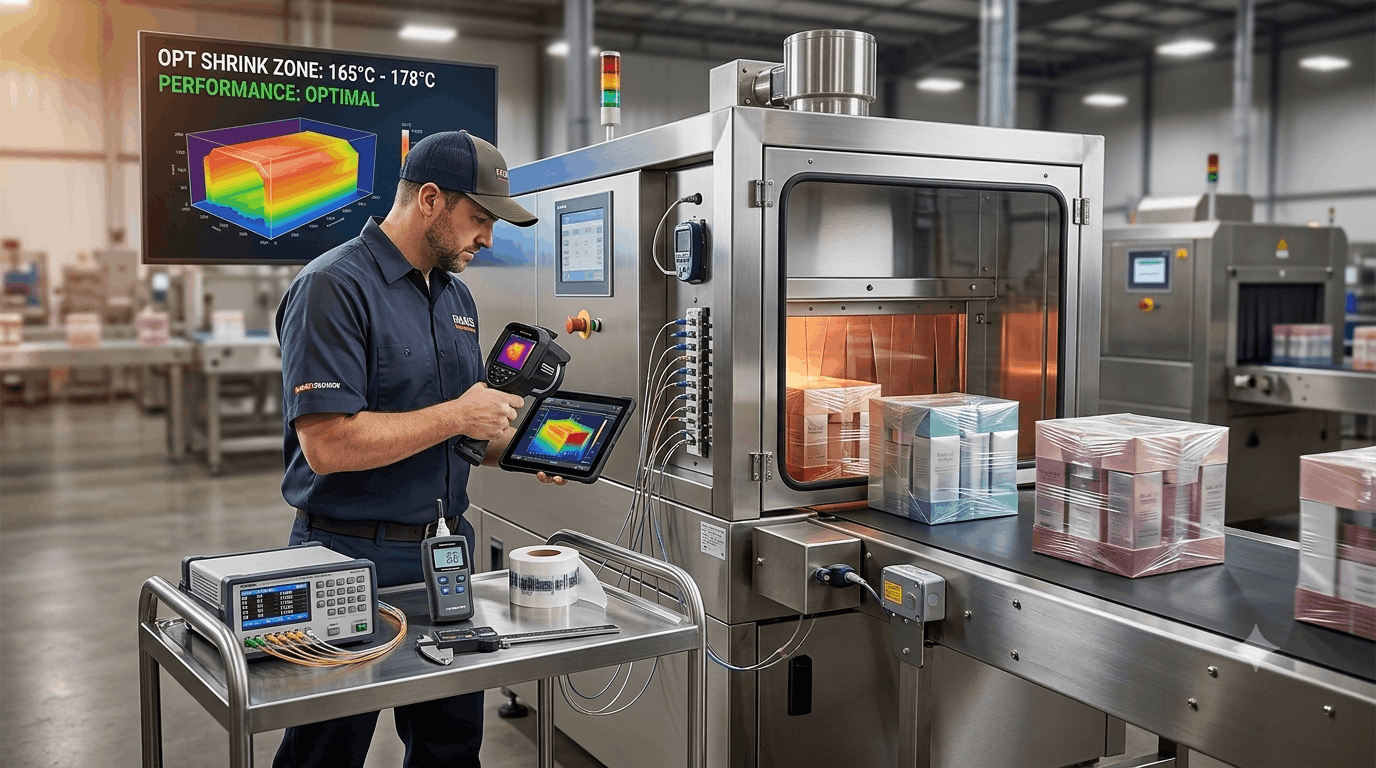
An industrial shrink tunnel machine uses controlled heat, airflow, and conveyor speed to achieve uniform shrink wrapping results. When temperature, conveyor speed, and airflow are properly balanced, the film shrinks uniformly to create a secure, professional-looking package. Incorrect settings can lead to wrinkles, loose wrapping, burnt film, excessive energy consumption, and unnecessary production downtime.
In this guide, Amarpack Machines Private Limited explains how temperature control influences shrink tunnel performance, common packaging defects, and practical methods to optimize your packaging process.
Why Temperature Control Matters in a Shrink Tunnel Machine
Temperature is the heart of every shrink wrapping operation. Shrink films are engineered to contract only within a specific heat range. When the correct temperature is maintained, the film tightly conforms to the product while preserving its appearance and strength.
Proper temperature control provides several advantages:
-
- Uniform and attractive packaging
- Strong film shrinkage
- Reduced material wastage
- Improved production speed
- Better product protection during storage and transportation
- Lower energy consumption
| AmarPack Machine |
Typical Application |
Example Temperature Range |
| APST-100 |
Small packaging |
130–170°C |
| APST-200 |
Medium production |
140–180°C |
| APST-300 |
High production |
150–220°C |
1.How a Shrink Tunnel Machine Uses Heat
A shrink tunnel consists of several integrated components that work together:
- Electric heating elements generate controlled heat.
- High-speed blowers circulate hot air throughout the chamber.
- A conveyor transports products at a controlled speed.
- Digital temperature controllers regulate the desired heat level.
- Airflow ducts distribute heat evenly around the product.
As products pass through the tunnel, the shrink film softens and contracts evenly around the product, creating a clean and durable package.
2. Recommended Temperature for Different Shrink Films
Different shrink films require different operating temperatures.
| Product Application |
Film Type |
Temperature Range |
Conveyor Setting |
| Food trays |
POF |
140–160°C |
Medium speed |
| Water bottles |
PVC/POF |
110–150°C |
High speed |
| Pharmaceutical cartons |
POF |
140–160°C |
Medium speed |
| Industrial parts |
PE |
170–220°C |
Slow speed |
The ideal temperature also depends on film thickness, product size, conveyor speed, and ambient working conditions.
3. Common Problems Caused by Incorrect Temperature
Temperature Too Low
When the tunnel temperature is below the recommended range:
- Loose packaging
- Wrinkled film
- Open corners
- Incomplete shrinkage
- Weak package appearance
Temperature Too High
Excessive heat can create:
- Burnt or melted film
- Product damage
- Film discolorationHoles in the packaging
- Excessive energy usage
Maintaining the correct balance is essential for producing high-quality packages consistently.
4. Conveyor Speed and Temperature Work Together
Conveyor speed determines how long the product remains inside the heating chamber.
Fast Conveyor + Low Temperature
- Loose shrink
- Wrinkles
- Poor film adhesion
Slow Conveyor + High Temperature
- Burnt film
- Product overheating
- Excessive shrinkage
Balanced Settings
The best packaging results are achieved by balancing conveyor speed with tunnel temperature according to the product and shrink film being used.
5. Factors That Affect Shrink Tunnel Performance
Several variables influence shrink quality:
- Type of shrink film
- Film thickness
- Product dimensions
- Product material
- Conveyor speed
- Air circulation
- Heating element efficiency
- Ambient temperature
- Tunnel length
- Machine maintenance
Operators should evaluate these factors together rather than adjusting temperature alone
6. How Digital Temperature Controllers Improve Performance
Modern shrink tunnel machines use digital PID temperature controllers that continuously monitor and regulate heat levels.
Benefits include:
- Accurate temperature control
- Faster machine warm-up
- Stable heat throughout production
- Reduced operator intervention
- Improved packaging consistency
- Lower electricity consumption
Digital controls also reduce the risk of packaging defects caused by temperature fluctuations.
7. Industries That Benefit from Proper Temperature Control
Food & Beverage
Ensures hygienic, attractive packaging while preserving product quality.
Pharmaceuticals
Protects medicines and medical devices with secure, tamper-evident packaging.
Cosmetics
Produces wrinkle-free packaging that enhances shelf appeal.
FMCG
Supports high-speed production with consistent packaging quality.
Electronics
Protects delicate products without exposing them to excessive heat.
Industrial Components
Provides secure packaging for transportation and storage.
8. Tips to Improve Shrink Tunnel Efficiency
Follow these best practices for better performance:
- Use the correct shrink film for your application.
- Preheat the tunnel before production.
- Match conveyor speed with film specifications.
- Clean heating chambers and blowers regularly.
- Inspect heating elements periodically.
- Replace worn conveyor belts when required.
- Avoid unnecessary overheating.
- Calibrate temperature controllers at scheduled intervals.
Preventive maintenance not only improves packaging quality but also extends machine life.
Why Choose Amarpack Shrink Tunnel Machines?
AmarPack Machines Pvt Ltd has been a trusted leader in manufacturing industrial packaging machinery since 1998. Engineered for high thermal efficiency and continuous operation, our shrink tunnels:
Our machines offer:
Key Advantages
- 27+ Years of Expertise: Proven track record in building durable, high-performance packaging systems.
- Customized Engineering: Tailored chamber sizes, airflow controls, and conveyor options (mesh, roller, or slat chain).
- Reliable & Energy Efficient: Built with heavy-duty insulation to minimize heat loss and operational downtime.
- Turnkey Support & Spare Parts: Fast access to genuine OEM replacement parts, complete installation, and technical assistance.
- Made in India: Built to international standards with dependable local aftermarket support.
Frequently Asked Questions