Call Now: +91 9920114400
GST No: 27AAZCA2345J1Z6
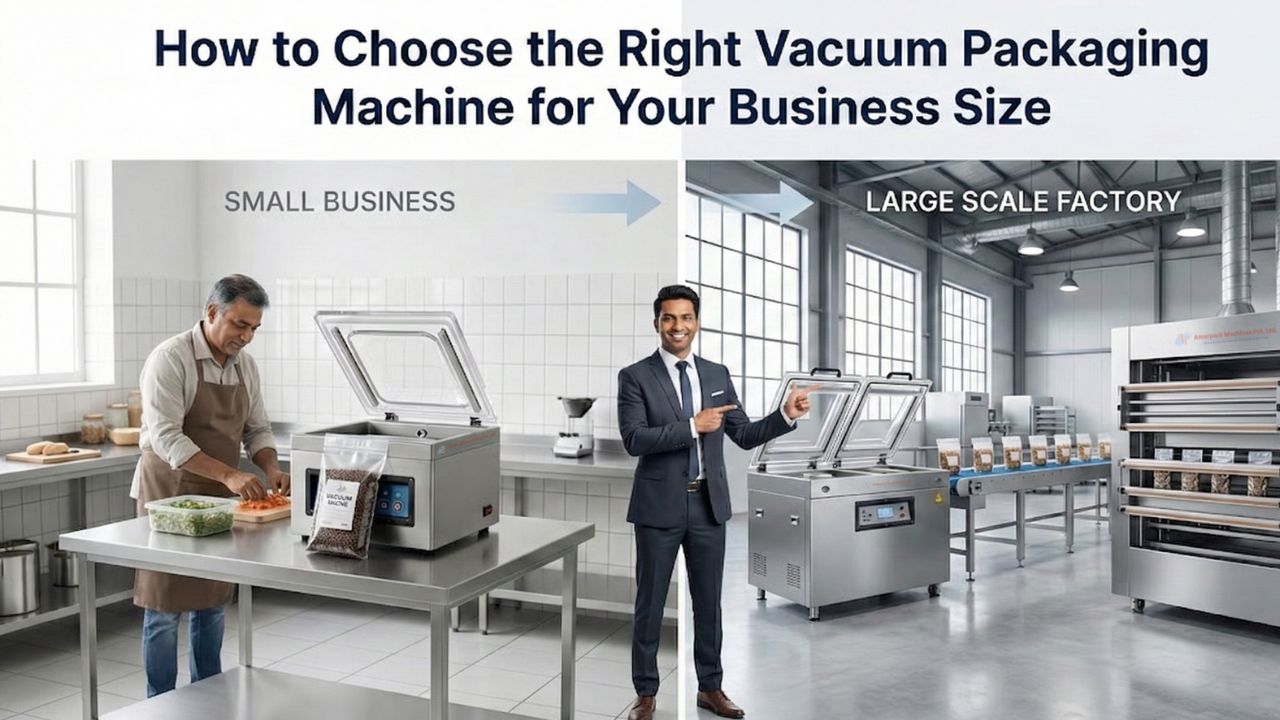
Selecting the right vacuum packaging machine is one of the most critical investments for businesses in food processing, pharmaceuticals, meat and seafood, dairy, and export industries. The wrong choice can lead to production bottlenecks, increased operational costs, product quality issues, and missed growth opportunities.
Whether you’re a startup cloud kitchen packaging ready-to-eat meals or a large-scale food processor exporting internationally, your vacuum packaging machine must align with your current production volume, budget constraints, and future scalability requirements.
The challenge most businesses face is not finding a vacuum packaging machine—it’s finding the right one. A small business buying an oversized industrial vacuum packaging machine wastes capital and floor space. Conversely, a growing manufacturer stuck with an under-capacity table-top unit faces production delays and customer dissatisfaction.
This comprehensive buying guide helps you navigate the decision-making process by matching machine types to business scale, production needs, and long-term growth plans. As a manufacturer offering a complete range of vacuum packaging solutions—from compact table-top models to high-speed double chamber systems—we understand that one size never fits all.
Your business size directly determines the type of vacuum packaging machine you need. Here’s why this matters:
Production Volume vs Machine Capacity A small meat shop packaging 50-100 packets daily has vastly different requirements than a central kitchen producing 5,000+ vacuum-sealed meal trays per shift. Matching machine capacity to actual production volume prevents both underutilization and overburdening.
Capital Expenditure Considerations Small businesses and startups operate with limited budgets. Investing ₹15-20 lakhs in a fully automatic vacuum packaging machine when a ₹2-3 lakh table-top model suffices creates unnecessary financial strain. Conversely, large manufacturers benefit from higher automation despite the premium investment, as labor savings and throughput gains deliver faster ROI.
Operational Complexity Manual and semi-automatic vacuum packaging machines suit businesses with smaller teams and simpler workflows. As operations scale, the need for automated feeding, conveyor integration, and continuous operation becomes essential to maintain efficiency.
Scalability and Future-Proofing Medium-sized businesses often face the toughest decisions. They need machines that handle current volumes while accommodating 30-50% growth over the next 2-3 years. Choosing a scalable vacuum packaging machine for business growth prevents costly equipment replacements during expansion phases.
Floor Space and Infrastructure Table-top vacuum packaging machines occupy minimal space—ideal for cloud kitchens and small processing units. Industrial vacuum packaging machines require dedicated floor areas, three-phase power, and proper ventilation, making them suitable only for established manufacturing facilities.
Understanding these distinctions ensures your vacuum packaging machine becomes a productivity asset rather than an operational constraint.
Let’s break down the ideal vacuum packaging machine recommendations for three distinct business scales.
Small-scale operations—including boutique food brands, startup meat shops, seafood retailers, artisan cheese makers, cloud kitchens, and dairy startups—require compact, affordable, and easy-to-operate solutions.
Typical Production Characteristics:
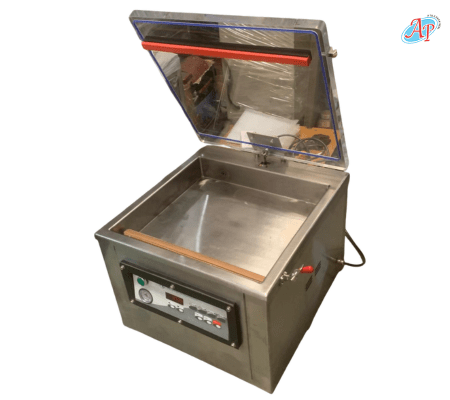
Ideal Business Size: Micro and small businesses, home-based food ventures, startups
Key Benefits:
Typical Applications:
Why It’s Cost-Effective for Small Businesses: The table-top vacuum packaging machine delivers professional packaging quality without the industrial price tag. Its manual operation eliminates complex automation costs while still providing consistent vacuum levels and hermetic sealing. For businesses processing 100-300 packets daily, this machine offers the perfect balance between affordability and functionality.
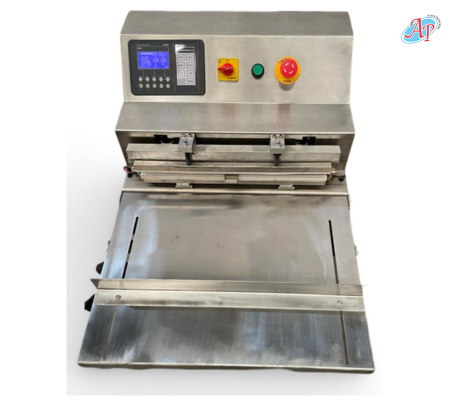
Ideal Business Size: Small to medium food processing units, specialty food manufacturers
Key Benefits:
Typical Applications:
Why It’s Cost-Effective for Small Businesses: This vacuum packaging machine for small business operations costs only marginally more than basic chamber models but handles a broader product range. The nozzle mechanism prevents product wastage by controlling liquid extraction, making it ideal for businesses where products contain moisture, marinades, or sauces.
Medium-scale operations—including regional food brands, multi-city distributors, contract manufacturers, and exporters—require higher throughput, better automation, and reliable consistency.
Typical Production Characteristics:

Ideal Business Size: Growing food brands, regional manufacturers, export-oriented units
Production Capacity Advantage: Floor-mounted nozzle type vacuum packaging machines process 400-800 packets per shift, handling both dry and wet products with equal efficiency. The larger chamber accommodates bigger pouches and bulk products.
Automation Benefits:
Typical Industries:
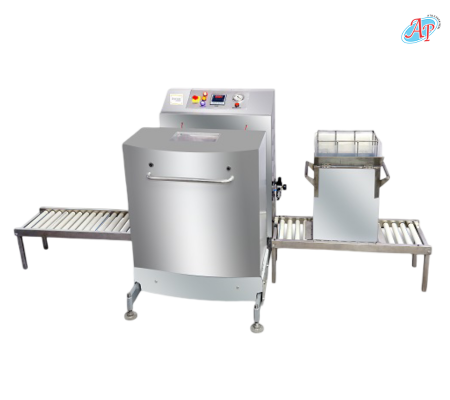
Ideal Business Size: Medium-scale food processors, pharmaceutical packaging units, component manufacturers
Production Capacity Advantage: This workhorse of the vacuum packaging industry handles 600-1,200 packets per shift with exceptional reliability. The enclosed chamber design delivers superior vacuum levels (up to 99%) and precise sealing control.
Automation Benefits:
Typical Industries:
Businesses evaluating multiple models can explore a complete range of vacuum packaging machines for food packaging to compare capacities and automation levels.
Large-scale operations—including major food processors, central kitchens for QSR chains, pharmaceutical manufacturers, and bulk exporters—demand high-speed production, continuous operation capability, and minimal downtime.
Typical Production Characteristics:
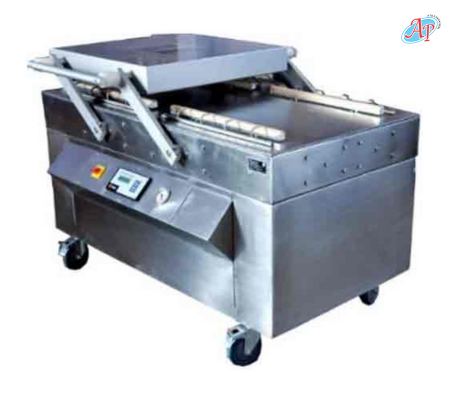
Ideal Business Size: Large food processors, central kitchens, high-volume exporters
High-Speed Production Capability: The double chamber vacuum packaging machine revolutionizes productivity by operating two chambers simultaneously. While one chamber evacuates air and seals, the second chamber is loaded—eliminating idle time and doubling throughput to 1,500-2,500 packets per shift.
Continuous Operation Benefits:
Suitability for Industrial Environments: Built with heavy-duty stainless steel construction, industrial-grade vacuum pumps (40-80 m³/hr), and robust sealing bars designed for continuous operation. This industrial vacuum packaging machine integrates seamlessly with conveyor systems, checkweighers, and metal detectors in automated production lines.
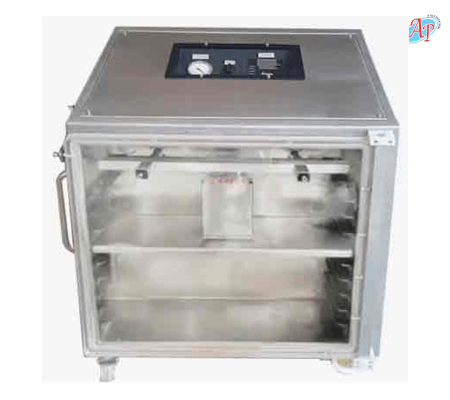
Ideal Business Size: Large-scale processors, bulk packaging operations, industrial meat plants
High-Speed Production Capability: Door type models accommodate large products and bulk packaging requirements that exceed standard chamber dimensions. These machines handle oversized cuts of meat, large cheese blocks, institutional catering portions, and export cartons requiring vacuum preservation.
Continuous Operation Benefits:
Suitability for Industrial Environments: These machines are engineered for harsh production environments with IP-rated electrical components, corrosion-resistant materials, and easy-access service panels. Perfect for cold storage integration and high-hygiene zones requiring frequent washdown procedures.
| Machine Type | Best For | Production Volume | Typical Industries |
|---|---|---|---|
| Table Top Vacuum Packaging Machine | Startups, micro businesses, home-based food ventures | 50–300 packets/day | Butcher shops, cloud kitchens, specialty foods, artisan producers |
| Nozzle Type Vacuum Packaging Machine (Table Top) | Small food units with liquid and wet products | 100–500 packets/day | Marinated meats, ready-to-eat meals, pickles, wet food processors |
| Nozzle Type Vacuum Packaging Machine (Floor Model) | Growing regional brands, export-oriented units | 500–1,500 packets/day | Meat processors, dairy, seafood exporters, contract manufacturers |
| Close Chamber Vacuum Packaging Machine | Established medium-scale manufacturers | 600–2,000 packets/day | Food processing, pharmaceuticals, electronics, specialty packaging |
| Double Chamber Vacuum Packaging Machine | Large-scale processors, central kitchens | 1,500–4,000 packets/day | QSR chains, major exporters, high-volume food plants, institutional catering |
| Door Type Vacuum Packaging Machine | Industrial operations, bulk packaging | 1,000–3,000 packets/day (large format) | Meat plants, bulk exporters, large dairy processors, industrial catering |
Beyond business size, several technical parameters determine whether a vacuum packaging machine meets your operational requirements.
Chamber Size and Product Dimensions Measure your largest product or pouch size and add 20% margin. Chamber dimensions must comfortably accommodate products without forcing or cramping. Standard chambers range from 300x250mm (table-top) to 1200x600mm (industrial door type).
Vacuum Pump Capacity Vacuum pump performance determines cycle speed and vacuum depth. Small businesses need 20-30 m³/hr pumps, while industrial operations require 60-100 m³/hr for fast evacuation. Higher capacity pumps reduce cycle time significantly in high-volume production. Reviewing detailed specifications of each industrial vacuum packaging machine helps ensure compatibility with existing production lines.
Sealing System Quality The sealing bar is your machine’s most critical component. Look for:
Automation Level vs Operator Skill Fully automatic vacuum packaging machines require less skilled operators but cost more. Semi-automatic machines offer flexibility for small batches but need trained staff. Match automation to your workforce capabilities and labor availability.
Maintenance and Service Support Industrial vacuum packaging machines operate 8-16 hours daily. Ensure your supplier provides:
Mistake 1: Buying Under-Capacity Machines to Save Initial Cost Many growing businesses purchase table-top machines when they actually need floor models. Within 6-12 months, production bottlenecks force expensive upgrades. Calculate your 24-month production forecast, not just current volumes.
Mistake 2: Over-Investing in Features You Don’t Need Startups sometimes buy industrial vacuum packaging machines with MAP (Modified Atmosphere Packaging), gas flushing, and conveyor integration they never use. These features add 40-60% to machine costs. Buy for today’s needs with scalability options, not hypothetical future requirements.
Mistake 3: Ignoring Product-Specific Requirements Liquid products need nozzle-type machines; solid dry products work well with chamber models. Attempting to vacuum-pack marinades in a standard chamber machine leads to product loss and pump damage. Match machine type to your product characteristics.
Mistake 4: Focusing Only on Price, Not Total Cost of Ownership A cheaper imported machine might save ₹2-3 lakhs initially but cost ₹5-7 lakhs extra over five years in spare parts, service delays, and downtime. Calculate TCO (Total Cost of Ownership) including maintenance, parts availability, and service response times.
Mistake 5: Buying from Traders Instead of Manufacturers Traders add 25-35% markup without offering customization, technical support, or reliable after-sales service. When issues arise, they point to the actual manufacturer, creating communication gaps and service delays.
Customization Capabilities As a vacuum packaging machine manufacturer, we customize chamber sizes, sealing bar lengths, control systems, and integration points to match your exact production layout. Traders sell standardized models without modification options.
Direct After-Sales Support When you buy from the manufacturer, our technical team directly supports your operations—no middlemen, no communication gaps. We understand every component because we built it. Service response times reduce from days to hours.
Genuine Spare Parts Availability Manufacturers maintain comprehensive spare parts inventory for all models. Vacuum pump diaphragms, sealing bars, gaskets, and control components arrive within 24-48 hours. Traders depend on manufacturer stock, adding weeks to your downtime.
Long-Term Partnership Your business evolves, and so do your packaging requirements. Manufacturers work with you through upgrades, capacity expansions, and new product line additions. We become your packaging technology partner, not just a one-time equipment vendor.
Cost Efficiency Eliminating trader margins reduces your initial investment by 20-30%. These savings allow better-equipped machines within the same budget or faster ROI on your packaging automation.
The best vacuum packaging machine for your business perfectly balances current operational needs with future growth potential. Small businesses benefit from compact, affordable table-top solutions that deliver professional quality without industrial pricing. Medium-scale manufacturers require robust floor models combining higher throughput with automation benefits. Large-scale operations demand industrial-grade double chamber or door type systems engineered for continuous production.
Your business size isn’t static—it evolves. The vacuum packaging machine you choose today should accommodate that growth without becoming a constraint. This is why working with a manufacturer offering a complete range becomes strategically valuable. As you scale from 200 packets daily to 2,000, your equipment partner should offer the next-tier machine and seamless upgrades.
Technical factors like chamber size, vacuum pump capacity, sealing quality, and service support ultimately determine whether your investment delivers ROI or regret. Avoid common pitfalls by matching machines to actual production forecasts, product characteristics, and total cost of ownership rather than initial price alone.
Remember: the right vacuum packaging machine doesn’t just preserve your products—it preserves your profit margins, operational efficiency, and competitive advantage. Choose wisely, choose scalably, and choose a manufacturing partner committed to your long-term success.
Businesses should consult an experienced vacuum packaging machine manufacturer for proper model selection, technical specifications alignment, and long-term capacity planning tailored to their specific production requirements and growth trajectory.
Working Demo Of Packaging Machine Manufactured By AmarPack Machines Pvt Ltd
For More, Visit Official Youtube Channel: AmarPack Machines Pvt Ltd
Looking to automate your packaging line?
Contact AmarPack Machines Pvt Ltd, India’s trusted packaging machine manufacturer serving global markets.

Founded in 1998 in Mumbai, India, AmarPack Machines Pvt. Ltd. is one of India’s leading manufacturers and exporters of premium packaging machines. Read More
Get a quick quote from our experts. Fast response guaranteed!