
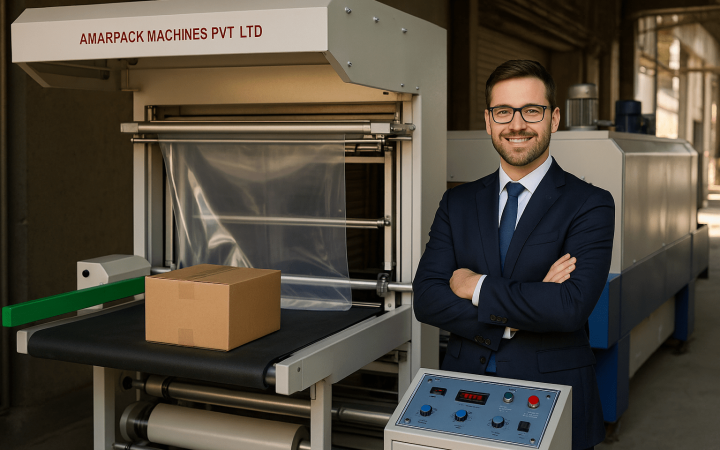
Selecting Shrink Wrapping Machine for Your Business is a mission-critical decision for industrial manufacturers and production facilities across India. The equipment you choose directly influences packaging speeds, costs, product protection, and the ability to meet rigorous industry standards for hygiene and compliance. AmarPack Machines, with over 27 years of engineering experience, provides a certified, reliable, and customizable range of shrink wrapping solutions for FMCG, pharmaceuticals, food and beverage, logistics, chemicals, and more.
This technical buyer’s guide is designed for production managers, packaging engineers, logistics coordinators, and procurement teams responsible for specifying or upgrading shrink wrapping lines. With an emphasis on AmarPack’s depth in Shrink Wrapping Machine design, shrink tunnel technology, web and L-sealers, and packaging line automation, this guide equips you to make informed decisions for both domestic and international operations.
Whether your packaging needs involve high-speed automated lines, stable multipack bundling, or secure secondary packaging with low downtime, understanding the core machinery types, film choices, and operational requirements will yield long-term value. AmarPack’s solutions are engineered for reliability and efficiency, fully compliant with ISO 9001:2015 and CE standards, supporting customers across India and overseas.
Learn about AmarPack's engineering experience and certifications to benchmark their commitment to quality manufacturing and industry compliance.
Understanding Shrink Wrapping Machines and Their Functions
Shrink wrapping integrates two main processes: sealing a product inside a shrink film, and then applying heat so the film contracts tightly around the item. This approach ensures protection from dust and physical handling, provides tamper resistance, and is widely used for both primary and secondary packaging.
How sealing and heat shrinking operate together:
- The product is placed inside a plastic film, often as a centerfold or tube.
- A seal bar (in L, side, or straight configuration) trims and seals the film, enclosing the product.
- The sealed pack enters a heated tunnel where precise temperature and airflow cause the film to shrink uniformly around the product, resulting in a tight, visually appealing wrap.
Key points distinguishing shrink wrapping from stretch wrapping:
- Shrink wrapping involves heat to contract film, making it suitable for retail packs, grouped items, and industrial bundles.
- Stretch wrapping relies on film tension (without heat) and typically stabilizes large, palletized shipments.
Shrink wrapping offers a reliable, tamper-resistant finish and supports scalability - from small, manual lines to high-output automated systems.
Types of Shrink Wrapping Machines Available
Industrial shrink wrapping machines come in multiple configurations suited to different production scales and packaging formats. Choosing the correct model depends on your automation needs, throughput targets, and range of packaged products.
Manual and Chamber Shrink Wrapping Machines: Operation and Typical Applications
- Operated by a single user for each cycle.
- Suitable for businesses with low daily output, frequent product changes, or variable pack sizes.
- The sealing and shrinking steps may happen together within a single heated chamber.
- Used by small factories, start-ups, or those offering diverse packaging solutions.
L-Bar Sealers Combined with Shrink Tunnels for Flexible Packaging Lines
- An L-bar sealer forms two seals around the product in one movement, suitable for consistent pack dimensions.
- The sealed package then travels through a dedicated shrink tunnel machine that applies controlled heat, tightening the film.
- Configurations range from manual and semi-automatic to fully automatic for different throughput requirements.
- Ideal for retail units, promotional packs, and industries needing both single-item packaging and multipack options.
- The Semi-Automatic Web Sealer Machine ideal for box bundling enables streamlined, secure, and cost-effective bundling of boxes, bottles, and trays in medium to high-volume lines.
Continuous Side-Seal Machines: Best for Steady, High-Volume Runs
- Designed for continuous operation, handling variable-length products with consistent width.
- Utilizes a side-sealing bar and conveyor feed for uninterrupted flow.
- Suitable for facilities requiring high outputs - typically 40 to over 100 packs per minute.
- Popular for applications with uniform product flows and for integrating into automated lines.
Sleeve or Bundle Wrapping Solutions for Multipacks and Grouped Products
- Applies an open-ended film sleeve that forms "bullseye" bundling - common for trays, bottle packs, and collated items.
- Seals are created along the sides or ends, with intentionally open holes suitable for secondary packaging.
- Delivers high throughput and is cost-effective for larger bundles and distribution packs.
| Machine Type | Automation Level | Typical Speed (packs/min) | Best Use Cases |
|---|---|---|---|
| Manual/Chamber | Manual | 2–8 | Small businesses, diversified products |
| L-bar Sealer + Tunnel | Semi/Automatic | 5–40 | Medium-scale lines, multipacks, retail |
| Continuous Side-Seal | Automatic | 40–150+ | High-speed, variable lengths |
| Sleeve/Bundle Wrapper | Automatic | Up to 150+ | Bundles, trays, distribution packs |
Explore AmarPack's range of shrink wrapping machines to see detailed configurations for each machine type.
- For box and carton applications, the Semi-Automatic Web Sealer Machine ideal for box bundling stands out for its professional results and operational cost-efficiency.
- For products requiring stability and precise alignment, the Slate Chain Shrink Tunnel Machine for stable packaging offers engineered performance on high-speed lines with minimal vibration.
How to Choose the Best Shrink Wrapping Machine for Your Business
Making the best investment in shrink wrapping machinery requires a thorough assessment of your packaging line, ongoing needs, and potential future expansion. Use this framework to streamline your decision.
1. Evaluating Product Dimensions, Shape, and Sensitivity
- Identify all item sizes (min/max), including irregular or fragile products.
- Factor in tolerance for heat, susceptibility to pressure, and edge sharpness.
2. Calculating Required Throughput for Peak and Sustained Production
- Set clear targets: maximum packs per hour/day, including changeover and downtime.
- Distinguish between catalog machine speeds and real-world, consistently achievable rates.
3. Aligning Machine Automation Levels with Workflow and Staffing
- Semi-automatic machines balance flexibility and manpower; operators load and position products but enjoy automation for sealing and shrinking.
- Fully automatic models automate feeding, positioning, sealing, and sometimes even collating or grouping, reducing staffing costs and increasing line speed.
4. Selecting Shrink Film Types Compatible with Machine Options
- Match film composition (LDPE, polyolefin, PVC), width, and thickness with both your products and the machine’s sealing technology.
- Confirm the film is suitable for the sealing bar style and tunnel temperature control available on your line.
5. Inspecting Sealing Capacity, Tunnel Dimensions, and Conveyor Requirements
- Seal bar length must exceed maximum product width.
- Tunnel chamber must fit the biggest product (include space for conveyor guides and airflow).
- Conveyor surfaces and speeds should be tailored to product weight, size, and desired output.
6. Considering Utilities, Line Space, Changeover Logistics, and Scalability Plans
- Assess available factory space, electrical supply (voltage, phase), and maintenance corridors.
- Fast changeovers reduce downtime for multi-SKU packaging environments.
- A scalable system should accommodate future increases in production or product range.
Technical Selection Checklist
- ☐ Define minimum and maximum product dimensions (L x W x H)
- ☐ Choose pack format (single, tray, bundle, etc.)
- ☐ Set required throughput (packs/hour, both peak and sustained)
- ☐ Specify film type, format, and thickness
- ☐ Select automation level
- ☐ Plan for integration with upstream and downstream processes
- ☐ Prepare for hygiene or regulatory standards if in food/pharma sectors
- ☐ Verify available space and utility connections
- ☐ Estimate future production growth
Machines from AmarPack can be adapted for a wide variety of production environments, from cleanroom requirements for pharmaceuticals to high-volume consumer goods lines, all backed by responsive technical support and in-country engineering resources.
Shrink Film Considerations in Shrink Wrapping
Film selection is essential for packaging cost, visual presentation, seal quality, and protection level. Optimal performance is achieved when the chosen film matches the machine’s technical profile and application demands.
Characteristics of Polyolefin (POF), Polyethylene (PE), and PVC Films
-
Polyolefin (POF):
- Offers excellent clarity, strength, and food compatibility.
- Flexible, works well for retail, multipack, and food items.
- Available in centerfold rolls and compatible with most automatic/semi-automatic machines.
-
Polyethylene (PE):
- High durability, often used for heavier or bulk packs.
- Provides a less clear but highly protective wrap, suitable for transit packaging and bundling.
- Suited for sleeve or bundle wrapping machines.
-
PVC:
- High clarity and shrink force but more brittle; typically not used for food.
- Limited industrial applications due to environmental concerns.
| Film Type | Clarity | Shrink Force | Common Uses | Available Formats | Machine Compatibility |
|---|---|---|---|---|---|
| POF | Clear | Moderate | Retail SKUs, food packs, bundles | Centerfold, single wound | L-bar, side-seal |
| PE | Translucent | Low | Heavy goods, trays, transit wraps | Tubing, layflat | Sleeve/bundle wrappers |
| PVC | Clear | High | Non-food, display items | Centerfold | L-bar, side-seal (limited) |
Determining Film Width, Thickness, and Impact on Presentation
- Width: Allow for product girth plus overlap margin for sealing.
- Thickness: 50–200 microns is typical; higher gauges for heavier items.
- Sealing Requirements: Some films require higher temperatures or pressure for proper sealing.
- Shrink Ratio: Impacts how tightly the film molds around complex shapes.
All AmarPack shrink wrapping machines are engineered to accommodate LDPE and a spectrum of shrink films, providing digital temperature and speed adjustments for consistent, high-quality results.
Beyond Machine Cost: Operating Budget and Efficiency Factors
Total ownership extends well beyond the equipment’s purchase price. Assessing every cost element ensures a sound investment and helps maintain healthy margins throughout the machine's life cycle.
-
Film Consumption and Cost per Pack
- Calculate based on pack size and cut-off length per operation.
- Monitor for off-cuts, start/end-of-roll waste, and rejected packs.
-
Labor Requirements and Cutbacks from Automation
- Increased automation can reduce operator headcount per shift.
- Analyze labor saved versus additional up-front investment.
-
Energy Consumption Related to Tunnel Heating and Throughput
- Shrink tunnels are the principal power consumers; opt for models with air recirculation, insulation, and efficient heating elements.
- Compare kWh ratings and expected throughput.
-
Maintenance Schedules, Spare Parts, and Downtime Impact
- Choose suppliers with local spare part availability for immediate replacements.
- Plan routine maintenance intervals to prevent unscheduled outages.
-
Example Cost Considerations
- Film rolls used per shift, expected monthly material consumption.
- Staff allocation and operator time (per 8-hour shift or annual).
- Annual maintenance shutdowns and parts budget.
- Comparative energy usage if running single versus double shifts.
Note: Always validate machine claims through pilot production runs and on-site evaluations, especially for high-growth lines or regulated industry packaging.
Installation, Operation, and Safety Best Practices
Proper setup, operation, and safety standards allow machines to deliver consistent results and minimize operator risks.
Training Operators on Machine Functions and Safety Protocols
- Conduct thorough, in-person training for all operators.
- Review loading, adjusting temperatures, film threading, and troubleshooting.
- Supervisors should perform regular skills assessments for all shifts.
Implementing Guarding Around Heated Sealing Bars and Tunnels
- All AmarPack machines are built with protective barriers over heated and moving parts.
- Safety interlocks prevent access during operation.
Importance of Ventilation and Access for Maintenance
- Position shrink tunnels in well-ventilated areas to dissipate heat.
- Ensure sufficient clearance on all sides for cleaning and service access.
Validation Through Trial Runs to Refine Parameters and Quality
- Always run representative product samples at full operating speed.
- Record optimal sealing and shrinking parameters for each SKU.
AmarPack’s ISO 9001:2015 and CE-certified manufacturing processes, technical support services, and safety features give buyers confidence in safe, compliant, and maintainable operations.
Troubleshooting Common Shrink Wrapping Challenges
Practical troubleshooting capabilities ensure production resilience and reduce waste.
- Wrinkled, Torn, or Dog-Eared Packs: Adjust film width or fine-tune tunnel airflow. Choose a film with better shrink balance.
- Incomplete or Weak Seals: Raise seal bar temperature, check sealing pad wear, and clean surfaces for debris.
- Burn-Through or Holes in Film: Lower tunnel temperature or conveyor speed, or switch to thicker film where necessary.
- Loose or Baggy Shrink Wrap: Increase tunnel dwell time or use film with higher shrink force.
- Product Movement or Shifting during Shrink: Use stable conveyor designs such as the Slate Chain Shrink Tunnel Machine for stable packaging. Adjust guide rails and ensure even airflow.
Routine process checks, maintenance logs, and operator training are your best defense against recurring packaging issues.
Pre-Purchase Checklist for Shrink Wrapping Machines
Before you finalize your purchase decision, systematically confirm each essential parameter:
- ☐ All intended product sizes are supported by seal bar and tunnel dimensions.
- ☐ Throughput capacity has been verified under realistic conditions.
- ☐ Preferred film types are compatible (film test runs, samples if possible).
- ☐ Equipment fits the available space and utility connections.
- ☐ Changeover times are manageable for your production profile.
- ☐ Pilot batches/tests show consistent seal and shrink quality.
- ☐ All cost elements - film, labor, maintenance - are understood.
- ☐ Machine includes mandatory safety features and training requirements.
- ☐ Support arrangements (spare parts, technician response) are specified.
For consultation, trial run scheduling, or a tailored quote, Contact AmarPack for customized packaging machinery solutions with their pan-India presence and expert engineer network.
Frequently Asked Questions
Which shrink wrapping machine suits small business volumes?
Manual and chamber models are suitable for lower daily outputs. They offer flexibility for frequent product changes with minimal automation investment.
What differentiates L-bar sealers from side-seal machines?
L-bar sealers place two perpendicular seals, ideal for standardized pack sizes and moderate volumes. Side-seal designs enable continuous operation for variable product lengths and higher sustained outputs.
Is a separate shrink tunnel always necessary?
Manual and chamber machines can combine sealing and shrinking. For higher-volume or automated lines, a dedicated tunnel is preferable for continuity and quality control.
How to accurately calculate required machine speed?
Base requirements on anticipated maximum pack output during peak periods. Factor in realistic operator speed, film changeovers, and potential downtime. Consider validated trials with your actual products.
How to verify machine capacity for specific product sizes?
Compare product size range with seal bar and tunnel opening specifications. Request sample test runs or reference case studies with similar product profiles.
What shrink film types are recommended for various applications?
Polyolefin for clear retail packs and food products; polyethylene for bundles, trays, or in-transit protection; PVC for special displays (non-food).
Can one machine handle multiple product dimensions effectively?
Most AmarPack machines are designed for flexibility but confirm size change limits with optional guides and ensure quick-change capability if frequent switches are needed.
What factors most affect shrink wrap quality?
Film type and thickness, correct temperature and speed settings, and regular cleaning of seal surfaces are all crucial for reliable, visually appealing results.
What operating and maintenance costs should be expected?
Key costs are film usage, energy for heating tunnels, staff time, routine and preventive maintenance, and prompt availability of replacement parts.
Which safety features are essential for industrial shrink wrappers?
Heat shields, guarding over moving parts, emergency stops, interlocks, and accredited operator training. AmarPack equipment adheres to ISO and CE protocols, with options for enhanced safety.
For further assistance, machine demonstrations, or guidance on configuring a packaging line specific to your sector, Contact AmarPack for customized packaging machinery solutions. Their expertise, technical support, and genuine in-country service underpin reliable packaging performance across India and internationally.