Automatic L-Sealer with Shrink Tunnel | Industrial Efficiency Guide
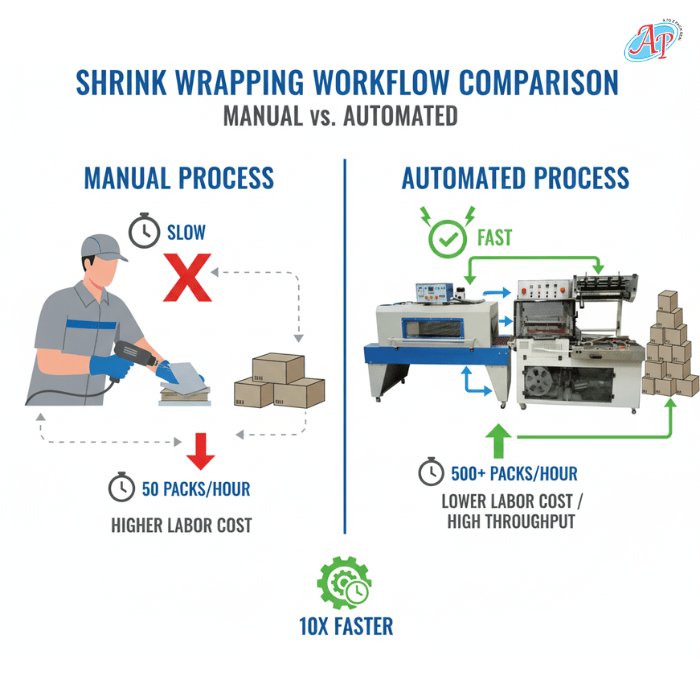
As manufacturing operations scale, packaging is often one of the first areas where inefficiencies begin to surface. Manual shrink wrapping, while suitable for low volumes or short production runs, can struggle to deliver consistent results in high-output environments. Variations in sealing quality, higher reliance on operator skill, and slower throughput can affect overall production efficiency.
Over time, these inconsistencies can lead to operational friction—rework caused by poor seals, inconsistent package appearance, and challenges in meeting production schedules. For manufacturers handling regular daily output, the cumulative impact of manual shrink wrapping becomes increasingly noticeable.
This is where automatic shrink packaging systems, such as the Automatic L-Sealer with Shrink Tunnel Machine, are commonly adopted. Rather than promoting a specific product, this guide explains how the technology works, why manufacturers move toward automation, and how these systems fit into modern industrial packaging workflows.
Understanding Automatic Shrink Packaging Technology
Shrink wrapping is widely used in industrial packaging because it combines product protection with visibility and professional presentation. The process involves wrapping products in thermoplastic film and applying heat so the film shrinks tightly around the product.
The effectiveness of shrink packaging depends on process control—maintaining stable temperature, sealing pressure, and film handling throughout production. In manual operations, these variables rely heavily on operator technique, which can vary over long production shifts.
An Automatic L-Sealer with Shrink Tunnel Machine addresses these variables by dividing shrink packaging into two controlled, automated stages:
Automating both stages allows manufacturers to maintain repeatable packaging quality across batches while reducing process variability.
What Role Does an L-Sealer Play in Shrink Wrapping?
The L-sealer performs the initial sealing stage in automatic shrink packaging. It forms a sealed enclosure around the product using heat-sealing bars arranged in an “L” shape.
How L-Sealer Heat Sealing Works
When the product is positioned on the conveyor, center-folded shrink film is placed around it. Heated sealing bars descend and apply controlled heat and pressure, sealing two sides of the film simultaneously. This method is particularly suitable for commonly used shrink films such as POF, PVC, and PE.
Maintaining proper sealing conditions is essential. If heat or pressure is insufficient, seals may be weak. Excessive heat can degrade film quality. Automatic L-sealers use regulated heating and controlled pressure to maintain stable sealing conditions across repeated cycles.
How the Shrink Tunnel Complements the Sealing Process
After sealing, products move into the shrink tunnel. The tunnel is a heated chamber designed to apply uniform heat around the sealed package, causing the film to shrink evenly and conform to the product shape.
Controlled Shrinking Environment
Inside the tunnel, heated air circulates continuously. This controlled environment allows manufacturers to:
Adjust temperature based on film type
Maintain uniform shrink quality
Avoid uneven heating associated with manual heat guns
Preserve film clarity and package appearance
The tunnel’s conveyor speed and temperature settings can be adjusted to match product dimensions and film characteristics, helping maintain consistent results across production runs.
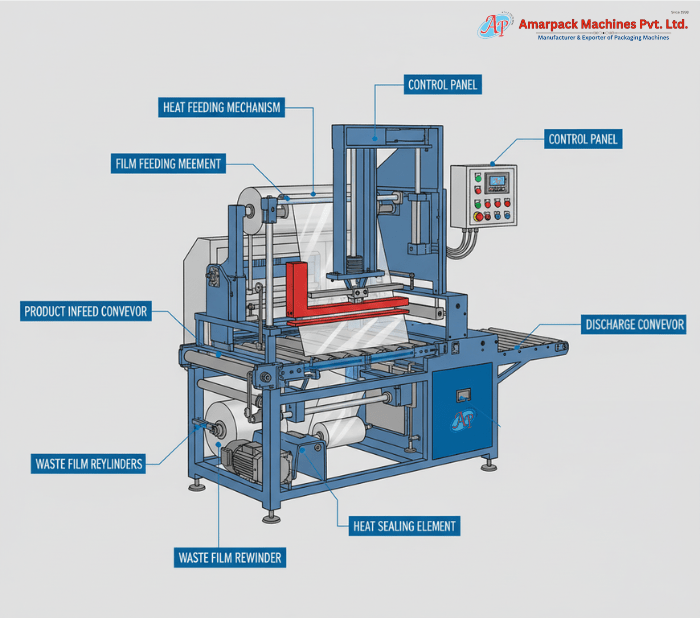
Key Components in an Automatic L-Sealer System
While configurations vary, most Automatic L-Sealer systems include:
Understanding these components helps manufacturers evaluate whether a system aligns with their packaging requirements and available production space.
Why Manufacturers Transition from Manual to Automatic Shrink Wrapping
The move toward automation is typically driven by operational considerations rather than marketing factors.
- Consistency and Repeatability: Automated systems deliver uniform sealing and shrink results, reducing variability that can occur with manual handling.
- Reduced Labor Dependency: Automation allows operators to focus on supervision and quality checks rather than repetitive manual tasks.
- Predictable Production Output: Packaging speed becomes stable and measurable, supporting production planning and scheduling.
- Improved Material Control: Controlled film feeding and heat application help reduce unnecessary film waste over time.
- Scalability: Automatic systems support increased production volumes without requiring proportional increases in packaging labor.
Technical Specifications and Operating Parameters
When evaluating an Automatic L-Sealer with Shrink Tunnel Machine, manufacturers typically consider:
Electrical supply compatibility
Power consumption of sealing and tunnel components
Supported film types (POF, PVC, PE)
Adjustable sealing and tunnel speeds
Pneumatic air requirements
Maximum product dimensions
Machine footprint and total system weight
These parameters help ensure compatibility with existing infrastructure and production requirements.
Common Applications of Automatic L-Sealer with Shrink Tunnel Machines
Depending on product dimensions and packaging requirements, these systems are commonly used for:
Packaged food and beverages
Consumer electronics and accessories
Personal care and cosmetic products
Printed materials and media
General retail and industrial goods
Final suitability depends on product size, film selection, regulatory considerations, and production volume.
Where Amarpack Fits into Automated Shrink Packaging
Manufacturers evaluating automation often seek suppliers with practical industry experience and understanding of real-world production environments. Since 1998, Amarpack has been involved in developing packaging machinery designed for industrial operating conditions.
Amarpack focuses on workflow compatibility, operational reliability, and ease of integration—factors that manufacturers commonly prioritize when introducing automated packaging systems into existing production lines.
Conclusion: Automation as a Packaging Strategy
An Automatic L-Sealer with Shrink Tunnel Machine represents a structured approach to improving packaging efficiency, consistency, and scalability. By automating sealing and shrinking processes, manufacturers gain greater control over packaging quality while supporting long-term production growth.
Understanding how these systems work and where they fit within the broader production workflow enables manufacturers to make informed decisions aligned with their operational needs.
Frequently Asked Questions