PlastIndia 2026 highlights made one thing obvious: plastics manufacturing is no longer judged only by faster molding or extrusion—it’s judged by dependable output and export-ready dispatch. When polymer producers, processors, recyclers, tooling, automation vendors, and end-of-line packaging suppliers share the same floor, you stop seeing “machines” and start seeing full production systems—and where they break under scale.
Held 5–10 February 2026 at Bharat Mandapam, New Delhi, the event surfaced the real upgrade priorities: traceability, inspection, OEE discipline, and especially end-of-line packaging automation (sealing, shrink, vacuum, labeling, and stabilization). Below is a practical, factory-focused breakdown of the PlastIndia 2026 key trends that matter after the part is produced—because that’s where damage, delays, and margin leakage usually begin.
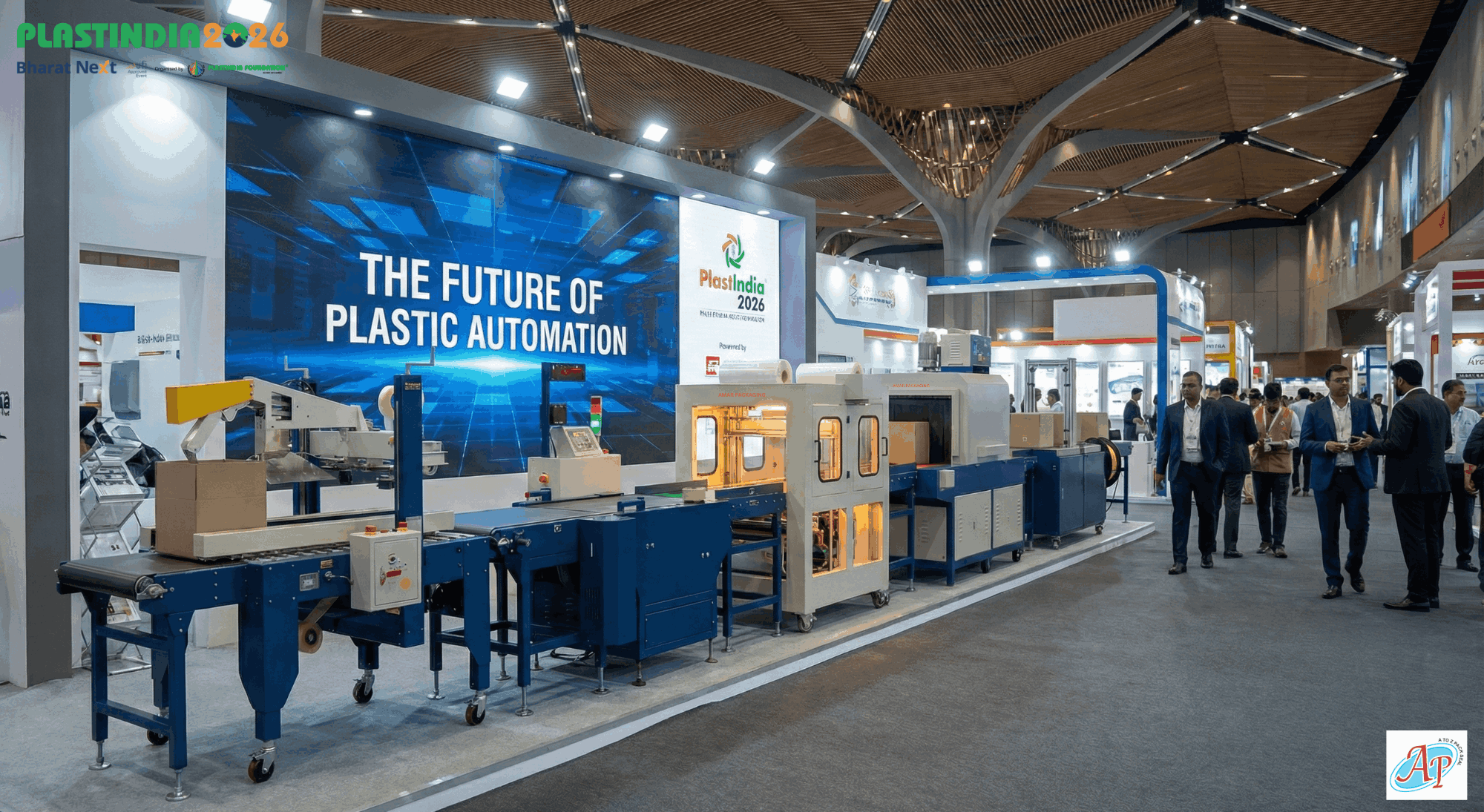
PlastIndia has always had a particular gravity in the Indian plastics ecosystem because it sits at the crossroads of three realities:
PlastIndia 2026 reinforced that this is not just an exhibition of “plastic machines.” It’s a showcase of manufacturing workflows: compounding → conversion (injection/extrusion/blow/thermoforming) → finishing → QC → packing → dispatch. The show’s official framing also emphasized the industry’s next phase and sustainability-driven operations.
When you strip away the marketing gloss, the dominant theme was simple: predictability at scale. Buyers aren’t only chasing speed anymore—they’re chasing stable output, stable quality, stable documentation, and stable delivery timelines. That forces changes across the production chain.
Many factories already improved molding or extrusion cycle times over the last decade. The next productivity ceiling is usually not the press; it’s the human-dependent steps around it: manual counting, manual bagging, inconsistent sealing, ad-hoc labeling, and packing variability that becomes expensive during dispatch or exports.
At PlastIndia 2026, the “automation story” wasn’t only robots on a pedestal. It was the quieter upgrades: conveyorized movement, sensor-driven reject logic, in-line checks, and end-of-line packing that doesn’t collapse when labor shifts change.
Factories that scale reliably tend to instrument their lines. That means tracking OEE (Overall Equipment Effectiveness), capturing scrap reasons, and linking batch data to packing and dispatch records. This matters because export customers increasingly want not just a product—but the story of how it was made, packed, and protected.
A key operational signal: PlastIndia 2026 was positioned with strong emphasis on circular economy practices and a “zero-waste” direction for the event itself. :contentReference[oaicite:2]{index=2} That matters because sustainability has moved from slogans to audits: segregation, recyclability, packaging reduction, and transport efficiency are now cost and compliance variables—not just branding.
The smartest manufacturers treat packaging as part of manufacturing—not as a last-minute shipping activity. Why? Because packaging is where you protect margin. Damage, contamination, scuffing, moisture exposure, and seal failures don’t just cause returns—they trigger customer distrust and chargebacks. PlastIndia 2026 showcased many ways factories are reducing this risk by formalizing end-of-line packaging systems.
In plastics, the product’s value can be destroyed after it’s “successfully manufactured.” That’s the paradox. Plastic components—whether molded caps, containers, profiles, sheets, trays, automotive parts, or engineered components—often fail in the market due to post-production handling: abrasion, dust contamination, deformation from stacking, UV exposure in yard storage, or inconsistent packing that creates transit damage.
Packaging automation is rising because it solves three factory realities simultaneously:
Within that context, several packaging technologies naturally appeared as “default tools” for modern plastics operations—because they’re versatile, cost-effective, and easy to integrate.
A shrink tunnel machine is less about aesthetics and more about load stability. Shrink packaging can convert loose, shift-prone packs into tight, tamper-evident bundles. In plastics, this is common for:
The industrial advantage is repeatability: consistent shrink tension and consistent pack geometry reduce warehouse handling issues and improve pallet utilization—an unglamorous but high-impact cost lever.
A web sealer with shrink tunnel fits naturally where output is continuous: extrusion profiles, high-volume molded items, or production cells that cannot afford stop-start packing. The “web sealer” approach tends to support higher line speeds and predictable sealing quality, which reduces rework and improves dispatch rhythm.
In practical terms, this is the difference between packing being an “event” (operators rushing at the end of the shift) and packing being a flow that matches production.
An L-sealer with shrink tunnel is often chosen when pack presentation and consistency matter—common in consumer-facing plastic goods, spare parts kits, hardware assortments, or standardized component packs for OEM supply. The main point isn’t retail glamour; it’s sealed integrity and repeatable pack sizing, which helps downstream carton packing and pallet patterning.
For many plastic items—especially precision parts, molded components with surface finish requirements, or products shipped into controlled environments—vacuum packaging machines are used to reduce air, minimize oxidation/contaminant exposure, and compress packaging volume. The “vacuum” benefit is rarely about food-style shelf life; it’s about protection and shipping efficiency:
When you view these machines as “risk reducers” rather than “packing machines,” their adoption trend makes perfect sense—especially for manufacturers trying to reach higher-value buyers.
One consistent pressure across the plastics sector is that buyers have become less forgiving. Domestic industrial customers want predictable deliveries and standardized packing. Export customers want all that—plus documentation, labeling discipline, batch traceability, and transit robustness.
That’s why PlastIndia 2026 felt particularly relevant to exporters and export-aspiring manufacturers: it wasn’t only about new polymer grades or faster presses. It was about eliminating the “hidden failure modes” that appear after production:
Exporters also care about how packing affects container economics: cube utilization, pack density, and pallet stability. Shrink systems and vacuum packing often show up here because they improve packing efficiency without turning the factory into a complex, high-maintenance robotics experiment.
The modern plastics factory is increasingly designed like a pipeline. That means end-of-line packaging cannot be an afterthought; it must be engineered into the layout. The integration pattern that kept surfacing (directly or indirectly) at PlastIndia-style ecosystems is:
Here’s the key insight: the “best” end-of-line system is not necessarily the most advanced—it’s the one that is reliable, maintainable, and matched to your product mix. Many factories with changing SKUs prefer modular packaging automation: shrink tunnels with adaptable settings, sealers configured for varying pack sizes, and vacuum packing where protection is critical.
This is exactly where Indian packaging machinery manufacturers become strategically relevant. For example, AmarPack Machines Pvt Ltd operates in this end-of-line automation layer—supplying shrink tunnel systems, sealing + shrink combinations (including web sealer and L-sealer configurations), and vacuum packaging solutions that align with how plastics manufacturers actually run lines in India: mixed batches, variable output, and tight dispatch windows.
Notice the positioning shift: the value isn’t “a machine.” The value is that packaging becomes an engineered process, not a scramble.
PlastIndia 2026 (theme “Bharat Next”) was a reminder that the next decade of plastics manufacturing will reward factories that treat operations as systems—materials, machines, people, and packaging all tied together.
From a practical perspective, here’s where I expect the industry to move next—based on the direction of the ecosystem and the real constraints manufacturers face:
Many processors can’t justify replacing major conversion equipment every few years. But end-of-line upgrades (conveying, sealing, shrink, vacuum packing, labeling discipline) often deliver faster ROI because they reduce labor variability, reduce damage, and increase dispatch throughput.
As sustainability and traceability demands intensify, packaging will increasingly be designed for measurable outcomes: material reduction, recyclability, batch traceability, and transport efficiency. The “zero-waste” framing around PlastIndia 2026 is a cultural signal pointing in that direction.
In mature operations, packing becomes a controlled specification: seal strength, film gauge, shrink profile, pack count, label placement, and pallet pattern. This is how manufacturers stop losing money after they’ve already done the hard part (making the product).
PlastIndia 2026 made one thing very clear: the plastics industry is shifting from “more output” to more dependable output. Automation is no longer just about speed; it’s about reducing chaos—especially in the final meters of the factory where products are packed, protected, labeled, and dispatched.
For plastic manufacturers, exporters, and industrial suppliers, packaging automation has become the quiet differentiator. Shrink tunnel systems, sealing + shrink configurations (including web sealers and L-sealers), and vacuum packaging are increasingly adopted not because they look impressive, but because they reduce defects, stabilize shipping, improve warehouse handling, and keep dispatch aligned with production reality.
That is the real lesson from PlastIndia 2026: the factories that win next won’t simply mold faster—they’ll ship smarter.
Manufacturers like AmarPack Machines Private Limited represent this new generation of Indian packaging solution providers.
With decades of experience, AmarPack designs and manufactures:
Built with Indian manufacturing intelligence and global application in mind, such companies demonstrate how Made-in-India packaging lines are now competing— and winning—on the world stage.

AmarPack Machines Pvt. Ltd., founded in 1998, is a leading manufacturer and exporter of packaging machines in India. With over 25 years of experience, we specialize in shrink wrapping machines, vacuum packaging machines, band sealers, and automatic liquid filling machines, delivering reliable packaging solutions to diverse industries in India and international markets
Get a quick quote from our experts. Fast response guaranteed!
