If you’re trying to standardize packaging quality (tight shrink, clean edges, fewer rejects) while keeping production moving, a shrink tunnel machine is usually the point where a packaging line stops being “manual jugaad” and starts behaving like an actual system.
And if you’re searching for a shrink wrapping machine, here’s the truth: most buyers use that term for the complete shrink packing setup (sealing + tunnel). In this guide, we’ll break down the working, the specs that actually matter, and how to buy the right machine in 2026 without overpaying or under-sizing.
Table of contents
- What a heat shrink tunnel machine is
- Shrink tunnel machine vs shrink wrapping machine
- How a shrink tunnel machine works (step-by-step)
- Technical specs that matter (with APST-200 reference specs)
- Performance checklist (speed, temperature stability, conveyor)
- Film compatibility: LDPE/LLDPE/POF (what to choose)
- Buying guide (2026): how to select the right machine
- Maintenance + safety expectations in 2026
- FAQs (your requested questions)
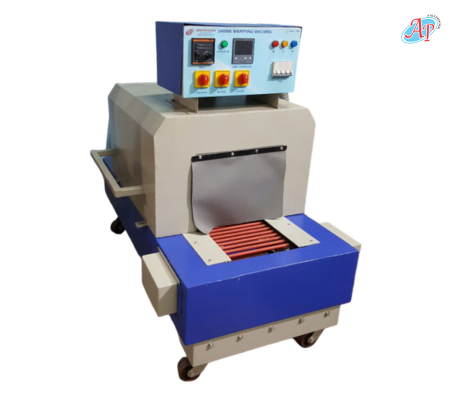
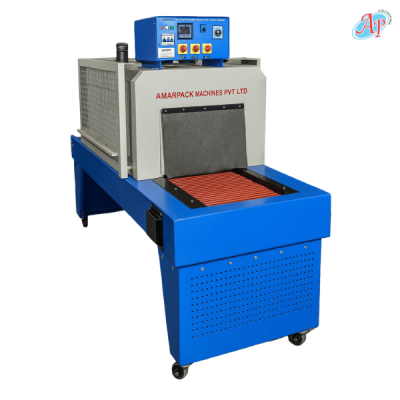
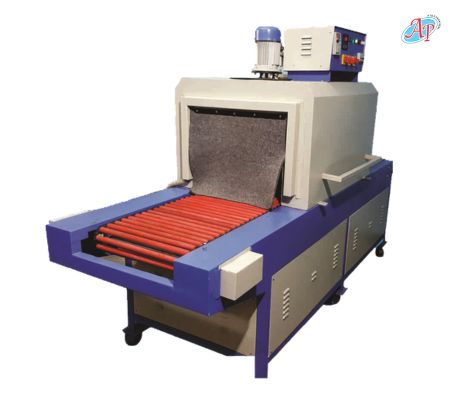
A heat shrink tunnel machine is a heated chamber (tunnel) that uses controlled hot air to shrink packaging film tightly around a product or bundle. Products travel through the tunnel on a conveyor, the film shrinks uniformly, and you get a sealed, tamper-evident, transport-friendly pack.
In industrial setups, the tunnel is designed for:
- uniform airflow,
- stable temperature control,
- continuous operation,
- and predictable output consistency.
2) Shrink Tunnel Machine vs Shrink Wrapping Machine (the buyer’s confusion, solved)
Here’s the simplest, most practical definition:
- Shrink tunnel machine = the heating tunnel section that shrinks film.
- Shrink wrapping machine = often used to describe the system (sealer + tunnel + conveyor), or sometimes just the tunnel depending on the seller.
That’s why you’ll see product pages titled “shrink wrapping machine” while the core industrial component is the shrink tunnel machine itself (because the tunnel determines finish quality, speed, and power consumption).
Compare Standard vs Heavy Duty Shrink Tunnel Machine models before buying.
3) How does a Shrink Tunnel Machine work for packaging?
A working shrink line is basically a 5-step ritual:
Step 1: Product collating (grouping)
Products are arranged as single packs, multipacks, trays, cartons, or bundles before wrapping.
Step 2: Film wrapping
Film (commonly LDPE/LLDPE/POF) is wrapped around the product.
Step 3: Sealing (optional but common)
Depending on your setup, sealing can be done by L-sealer / web sealer / manual sealing methods. Then the pack is sent forward into the tunnel.
Step 4: Heat shrinking inside the tunnel
Inside the shrink tunnel machine, recirculating hot air shrinks film evenly around the pack. A recirculating airflow system is specifically valued for uniform shrinking and energy efficiency.
Step 5: Cooling + setting the finish
A cooling section improves clarity and “sets” the shrink so the pack holds shape and doesn’t loosen after exiting.
4) Technical Specs that Matter (and the specs buyers ignore at their own peril)
Below are real-world spec parameters you should compare before you buy any shrink tunnel machine or shrink wrapping machine.
A) Tunnel size (your product decides this, not your ego)
Tunnel dimensions decide:
- what fits,
- what doesn’t,
- and how much air volume must be heated.
Example reference sizes for a standard industrial tunnel include 12″×12″, 14″×14″, 16″×14″.
Rule of thumb: keep 25–50 mm clearance around the product on all sides for clean airflow (more clearance for irregular shapes).
B) Conveyor type (this controls stability + finish)
Conveyor choice affects:
- pack alignment,
- wobble,
- seal distortion,
- and shrink uniformity.
A common industrial configuration is live roller rod conveyors for smooth product flow and reduced damage.
Many systems also offer conveyor variants like mesh belt / Teflon belt / slat conveyors depending on product type.
C) Production speed (don’t buy based on “max speed” marketing)
Look for an adjustable range. A typical industrial reference spec is 6–20 packs per minute (adjustable).
Real output depends on:
- operator loading,
- sealing method,
- film type,
- product geometry,
- tunnel temperature stability.
D) Temperature range + control accuracy (this is where quality comes from)
A useful tunnel supports up to 0–300°C (auto-controlled) to handle common shrink films and thicknesses.
For consistent finish at higher throughput, precision control matters—some industrial setups highlight ±2°C accuracy and zone-based heating for uniform shrink across different product sizes.
E) Heating system & energy efficiency
Modern tunnels increasingly use hot-air recirculation for more even heat distribution and better efficiency. Example: fully recirculating air system with stated efficiency improvements.
Some designs also claim significant reductions in power consumption via improved recirculation and reduced heat loss.
F) Heater configuration
Heater layout affects warm-up time and shrink uniformity. Example configuration: 12× SS U-type heaters with fins.
G) Power requirement (site readiness check)
Industrial tunnels commonly run on 3 Phase, 440V, with a reference example of 9 kW.
H) Motor specs
Motor sizing ties to conveyor load and continuous use. A reference spec includes 1/2 HP or 1/4 HP AC motor.
I) Customization options (where serious buyers win)
In 2026, buyers should expect customization like:
- SS body options,
- variable speed,
extension conveyors.
5) Example Specs Snapshot (Standard Industrial Heat Shrink Tunnel)
If you want a quick benchmark checklist for a mid-production shrink tunnel machine, here’s a reference spec set:
- Model code: APST-200 (reference)
- Tunnel sizes: 12″×12″, 14″×14″, 16″×14″
- Conveyor: live roller rod conveyors
- Speed: 6–20 packs/min adjustable
- Temperature: 0–300°C auto-controlled
- Heating: recirculating air system
- Heaters: 12× SS U-type with fins
- Power: 3-phase 440V, ~9 kW
- Cooling chamber: integrated
That combination is typically positioned as a stable “workhorse” zone between portable entry-level machines and heavy-duty automatic lines.
6) Shrink Film Compatibility in 2026: What to use and why it matters
Film choice decides:
- shrink appearance,
- seal strength,
- durability during transport,
- and even tunnel temperature behavior.
Many industrial tunnels are positioned for LDPE/LLDPE compatibility (especially for heavier packs and multipacks).
Other common shrink films used in the market include PVC and POF (often depending on product category and finish expectations).
Practical selection logic:
- LDPE/LLDPE: stronger, great for bottles, cartons, industrial loads, thicker film grades.
- POF: better clarity for retail display (common with L-sealer setups).
- PVC: budget retail use (less common for industrial heavy loads).
Read the full blog on choosing the right shrink film for your product type.
7) Buying Guide (2026): How to choose the right Shrink Tunnel Machine
Here’s the buyer checklist that prevents most “wrong machine” purchases:
1) Confirm your pack size range (min + max)
- Measure your biggest pack (including air gaps).
- Choose tunnel size with clearance for airflow.
2) Define production reality (not your dream capacity)
- Current line speed + 12-month growth estimate.
- If you’re targeting mid-scale throughput, a standard tunnel class may align with ~500–1200 packs/day benchmark territory (depends on workflow).
3) Demand stable temperature control
Look for:
- strong controller accuracy (consistency reduces rejects),
- airflow recirculation,
- insulation quality.
4) Choose the right conveyor for your product
- Live roller: general industrial stability.
- Mesh belt: lightweight/irregular products.
- Teflon belt: delicate or heat-sensitive items.
- Slat conveyor: heavy/bulky loads.
5) Check safety + compliance expectations
In 2026, your shortlist should include:
- emergency stop,
- thermal protection,
- safety interlocks,
- optional PLC automation,
- and stated compliance with safety standards where applicable.
6) Ask about after-sales support (this is where ROI lives)
A shrink wrapping machine is not a “buy once and forget” asset. Ask about:
- installation & training,
- spare parts availability,
- service turnaround time,
- AMC options,
- remote troubleshooting.
(Some manufacturers explicitly position their after-sales network and service technicians as part of the offer.)
8) Applications: Where Heat Shrink Tunnels are used most
A properly configured shrink tunnel machine is used across:
- Industrial packaging & bulk goods (boxes, cartons, components)
- FMCG multipacks & retail bundles
- Bottle & beverage packs (water, soft drinks, juices)
- Pharma & medical packs
- High-thickness LDPE film packaging for heavier products
9) Maintenance + operating tips (quick, useful, unglamorous)
- Keep airflow paths clean (dust buildup = uneven shrinking).
- Calibrate temperature controller periodically (stability beats “higher temp”).
- Match conveyor speed with film thickness (most wrinkles are speed-temp mismatch).
- Use proper film storage (humidity + heat exposure = unpredictable shrink).
- Maintain electrical safety (3-phase stability matters).
The most important factor in any business investment is Return on Investment (ROI). Before purchasing, understand the ROI of a Shrink Tunnel Machine and how it improves packaging efficiency and reduces operational costs.
Where Companies Like AmarPack Fit In
Manufacturers like AmarPack Machines Private Limited represent this new generation of Indian packaging solution providers.
With decades of experience, AmarPack designs and manufactures:
Built with Indian manufacturing intelligence and global application in mind, such companies demonstrate how Made-in-India packaging lines are now competing— and winning—on the world stage.
FAQs