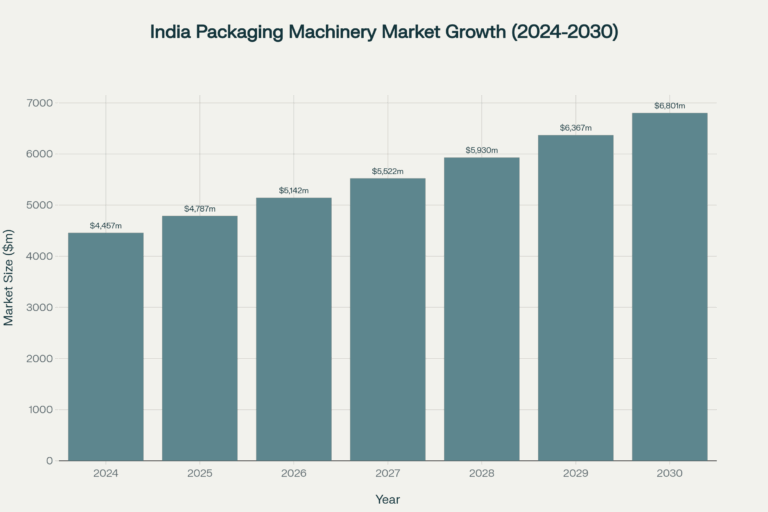
Packaging Machine Industry in India stands at the threshold of unprecedented transformation, driven by rapid industrialization, expanding consumer markets, and technological innovation. With the sector projected to reach $6.8 billion by 2030, growing at a robust 7.4% CAGR, packaging machines have become the backbone of modern manufacturing across FMCG, pharmaceuticals, cosmetics, food processing, and export sectors. As domestic consumption patterns evolve and global trade expands, India is positioning itself as a global hub for packaging machinery exports, with companies like AmarPack Machines leading this industrial revolution through decades of manufacturing excellence and innovation.
Importance of Packaging Machine Industry in India
1. Hygiene & Safety Standards
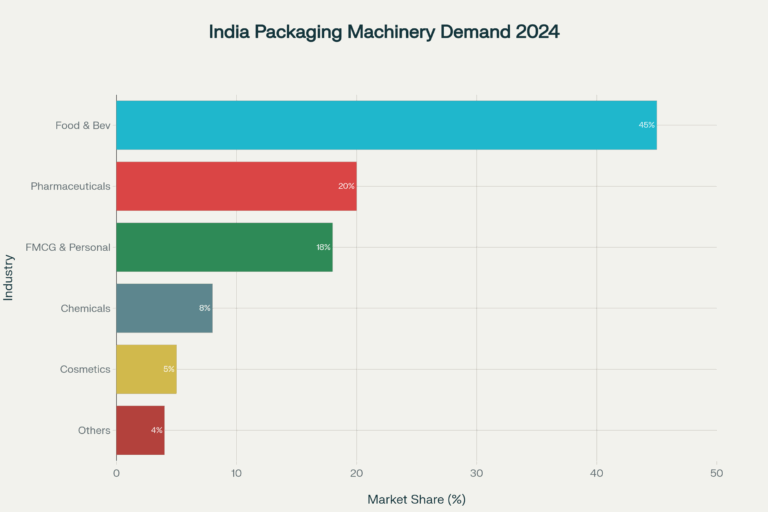
In today’s health-conscious environment, packaging machines ensure critical hygiene and safety standards, particularly in food and pharmaceutical industries. Automated packaging systems eliminate human contact, reducing contamination risks while maintaining sterile environments required for sensitive products. For pharmaceutical packaging, machines must comply with stringent GMP standards, ensuring every product meets regulatory requirements for patient safety.
2. Branding & Shelf Appeal Enhancement
Modern packaging machinery enables sophisticated branding capabilities that drive consumer purchasing decisions in FMCG and cosmetics sectors. Advanced labeling, printing, and sealing technologies create attractive, tamper-evident packages that enhance shelf appeal and build brand trust. Companies can now achieve consistent branding across millions of units, supporting market differentiation strategies.
3. Operational Efficiency & Speed
Packaging automation dramatically increases production speeds while reducing manual labor requirements. Modern machines can handle 1,500-1,800 units per hour for filling and sealing operations, compared to manual processes that achieve only 200-300 units hourly. This efficiency translates to significant cost savings and faster time-to-market for products.
4. Cost-Effectiveness in Bulk Operations
Bulk packaging capabilities reduce per-unit costs while improving material utilization efficiency. Automated systems optimize packaging material usage, reduce waste, and lower operational costs through consistent, precise operations that eliminate human error and material over-usage.
The Packaging Machine Industry in India – Market Overview
Market Size & Growth Trajectory
India’s packaging machinery market generated $4.457 billion in 2024 and demonstrates exceptional growth momentum. The sector benefits from India’s expanding manufacturing base, rising disposable incomes, and urbanization trends driving packaged goods consumption.
India’s packaging machinery market growth projections showing strong CAGR of 7.4% from 2024 to 2030
India's Competitive Manufacturing Advantages
Indian packaging machinery manufacturers offer compelling advantages over global competitors, particularly from Europe and Japan. Lower manufacturing costs, combined with high-quality engineering and customization capabilities, make Indian machines attractive for both domestic and international markets. The country’s skilled technical workforce and established supply chains support competitive pricing while maintaining quality standards.
Key Regional Manufacturing Hubs
Mumbai & Maharashtra: India’s packaging machinery manufacturing epicenter, hosting leading companies like AmarPack, Next Packaging, and Shruti Flexipack. The region benefits from proximity to major industrial customers and established infrastructure.
Delhi & NCR: Major hub for packaging machinery suppliers and exporters, serving North Indian markets and facilitating exports to Middle East and European markets.
Gujarat: Significant manufacturing base with companies like Packmech Group in Ahmedabad, specializing in vacuum packaging solutions. The state’s pro-business environment attracts packaging machinery investments.
Bangalore & Chennai: Growing centers for advanced packaging technologies, particularly serving South Indian pharmaceutical and food processing industries.
Export Market Expansion
Indian packaging machinery exports span over 95 countries, demonstrating the industry’s global competitiveness. Key export markets include
UAE & Middle East: $37.1 billion in total trade value, with packaging machinery representing a growing segment. Cultural proximity and logistics advantages make UAE a strategic re-export hub for Indian machines.
Africa: $45 billion market with strong demand for cost-effective packaging solutions. Indian manufacturers are well-positioned to serve Africa’s growing manufacturing sector with appropriate technology and pricing.
Bangladesh: Significant export destination for packaging machinery, particularly serving the country’s expanding textile and food processing industries.
Europe & USA: Premium markets demanding high-quality, innovative packaging solutions. Indian exporters are increasingly penetrating these markets with advanced machinery offerings.
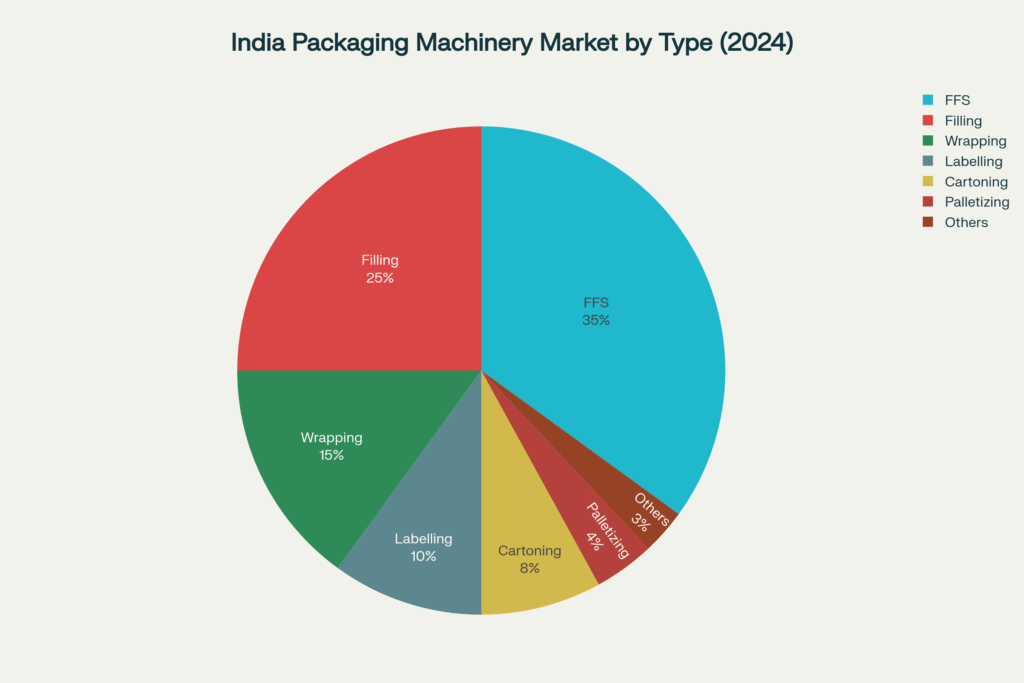
Types of Packaging Machines in Demand