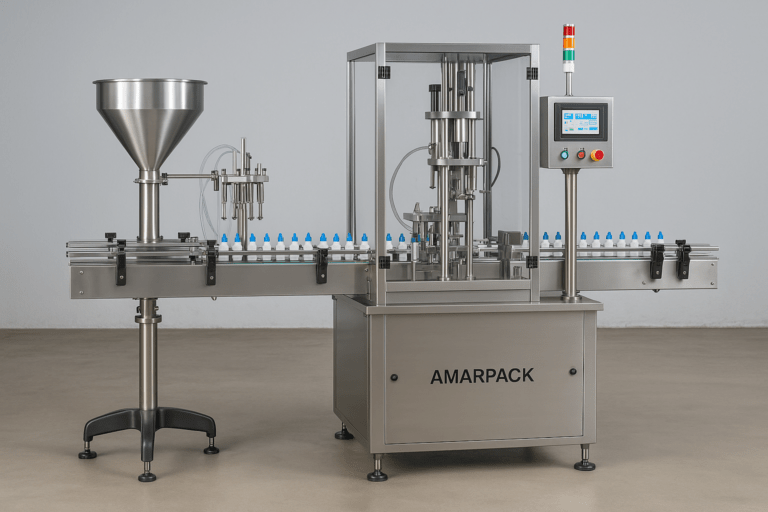
Why Today’s Pharma Leaders Are Automating
In pharmaceutical manufacturing, every second counts.
Whether you’re producing for domestic demand or competing in global markets, speed, precision, and compliance drive success.
If your eye drop packaging line still involves manual or semi-automatic processes, you’re likely battling:
- Slow output
- Quality inconsistencies
- Labor challenges
- Regulatory risks
This is where a Fully Automatic Eye Drop Filling, Capping & Sealing Machine becomes more than equipment—it becomes your competitive advantage.
1. Multiply Your Production Output—Without Adding Labor
With automation, businesses are scaling faster, fulfilling larger orders, and reducing delivery timelines.
This machine can handle up to 120 bottles per minute, with synchronized filling, capping, and sealing.
Real Business Gains:
Finish orders in 1/3rd the time
Meet export-level volume demands
Run 24/7 production with minimal manpower
For pharma brands looking to expand or fulfill high-demand contracts, this is a breakthrough in productivity.
2. Eliminate Human Error & Ensure Regulatory Compliance
In pharma, the margin for error is zero. One minor contamination or underfilled bottle could lead to serious repercussions.
The machine ensures:
What That Means for You:
Cleaner, safer, and fully compliant batches
Less risk of rejection from QC departments or export audits
Stronger trust from doctors, distributors, and end users
3. Reduce Operational Costs Over Time
Let’s talk ROI.
Switching to a fully automatic system may seem like a capital expense upfront—but it pays back quickly by cutting costs in:
Manual labor
Product wastage
Machine downtime
You save on salaries, training, supervision, and error correction. Over 6–12 months, the machine starts paying for itself.